

Do you worry about not having a big enough patient load at your wound care and hyperbaric medicine clinic? Do you struggle with marketing due to low budget and not enough resources? You are not alone. We all know that maintaining a steady patient load is critical to keeping your wound care and hyperbaric clinic doors open and your staff (and yourse
Last week we released the first video in a new series on preventing diver fatalities. The second video in the series is now available! In the second video, we discuss two types of common surface related injuries to divers - those that occur during the entrance to a dive site, and boat related injuries. In this video you will learn: The most common
This month we are discussing how to prevent diver fatalities. As part of that discussion, we are launching a free three-part video series. In the first video, we define diving medical fitness and answer common questions such as: Are diving physicals really necessary?Can they prevent diving accidents?Why is diving fitness necessary in recreational d
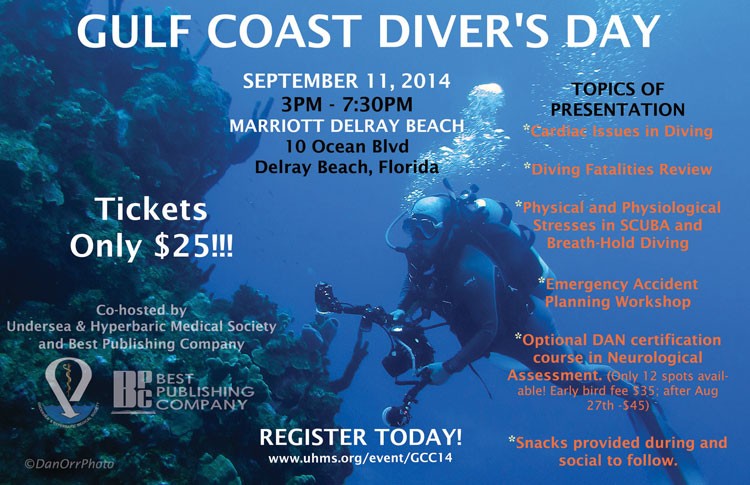
GULF COAST DIVER'S DAY SEPTEMBER 11, 2014 3:00PM - 7:30PM MARRIOTT DELRAY BEACH 10 Ocean Blvd Delray Beach, Florida Gulf Coast Diver’s Day 2014 is coming fast - September 11th in Delray Beach, Florida. The annual event is co-hosted this year by the Undersea and Hyperbaric Medical Society (UHMS) and Best Publishing Company. The Diver’s Day pr
A startling vindication of Cunningham’s assertion that a modest increase in pressure improves health has come from a study in Israel of patients with advanced lung disease, published in the journal Chest in 1996.17 The patients who were all receiving supplemental oxygen in Jerusalem were taken down to the Dead Sea to see if they would benefit from

If a gas not containing any oxygen is breathed, consciousness is rapidly lost with no increase whatever in the rate of breathing. Haldane had witnessed the effects first-hand down in the coal mines of South Wales: “Thus it is a common experience with miners going into an atmosphere of nearly pure fire damp [methane, CH4], or climbing up so that the
Drysuits provide the greatest form of passive thermal protection for the diver. They are designed as one piece suits with a waterproof zipper for entering and exiting and have attached boots and seals at the diver’s wrists and neck to provide a dry internal environment. The suits are normally designed so a wide variety of insulating undergarments m
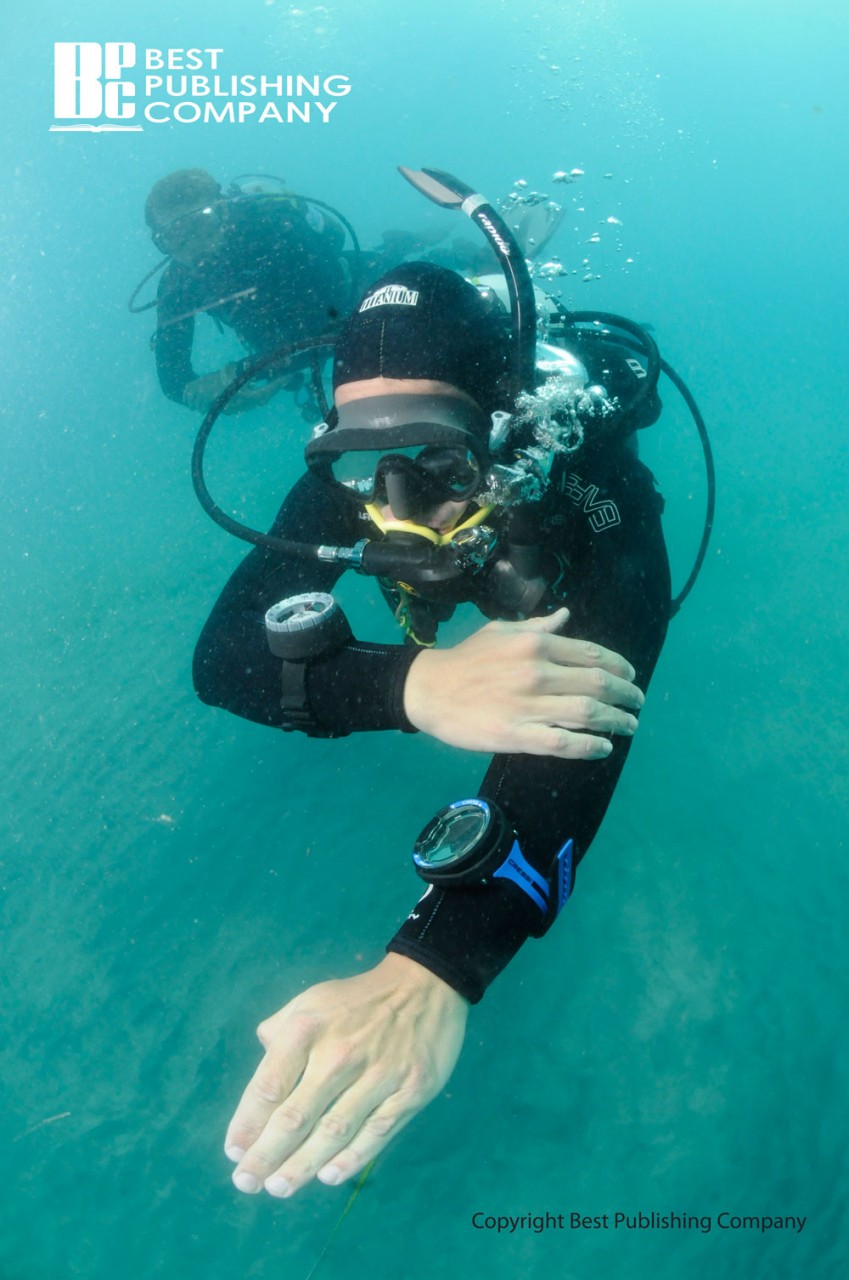
Basic underwater navigation by means of simple observation or use of a compass and depth gauge remains a fundamental and essential skill for all divers. For most short excursions, these are the only instruments needed. Even when using advanced navigation instruments, basic navigation skills provide an important backup. Much navigation can be accomp
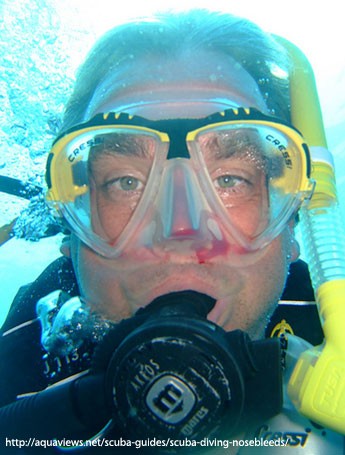
The term “sinus” can mean any channel, hollow space, or cavity in a bone, or a dilated area in a blood vessel or soft tissue; most often sinus refers to the four, paired, mucus-lined air cavities in the facial bones of the head. The same kind of membrane lines the sinuses and nose, so nasal infections spread easily to the sinuses. In sinusitis, muc

Are you looking for a high-quality, convenient, applicable CME/CEU course in undersea medicine, hyperbaric medicine, and wound care? Join us this month (August 22-23) for a unique and dynamic two-day CME/CEU accredited event that will give you the tools you need to create an exceptional practice in diving and undersea medicine, hyperbaric medicine,