


"Every time I submerge, a feeling of excitement and exploration fills me." The beginning of author Jennifer Idol's stay in Raja Ampat was filled with experiences of seeing a variety of animals for the first time - very exciting for this extremely experienced underwater photographer. "I saw animals I'd dreamt of seeing like the wobbegong shark
While it is approaching summer here in the northern hemisphere, down in Antarctica it is close to winter, where temperatures plummet to -50 degrees and darkness prevails for months. Scientists rarely dive under these conditions, but it has occurred in the past. John Heine, author of Cold Water Diving: A Guide to Ice Diving, regularly travels to Ant
Does Scuba Diving Have a Retirement Age? When taking stock of our physical abilities and capabilities as we age there are absolutes that divers should be familiar with. The good news is that with age usually comes wisdom, and that improved judgement and reasoning can help you compensate for most negative body function changes. Knowing t
One of the reasons why author Paul Mila chose a sea turtle as the main character in Harry Hawksbill Helps His Friends was to bring sea turtles to the forefront of peoples' minds when thinking about ocean conservation. They certainly deserve, and need, our help. Consider the odds: the average sea turtle nest contains about 100 eggs, most of which wi
NSF Polar Programs Diving Safety Officer prepares for a dive on the Poseidon Se7en rebreather under the ice in Antarctica. Wearing a dry suit with heated undergarments and dry gloves keeps the divers warm (enough) to do their work in the -1.8C water. You can learn more about cold water and ice diving in the book by John entitled Cold Water Diving:
Curious to explore the undersea world, Alexander the Great used a glass diving bell to submerge himself below the surface. The fish, it is said, “crowded around him in homage.” In 332 BCE, he ordered soldiers to submerge inside diving bells and destroy the enemy’s underwater defenses. Underwater operations got much more serious in the 1930s when Ma
Raja Ampat is a special place. Author Jennifer Idol is traveling this week to share her experiences exploring the cradle of our oceans. Jennifer shared, "I used to dream of a place where lush mountain and oceans met. It would seem I was dreaming of Indonesia. The region is an archipelago of islands marked by four large islands, the four kings. It i

"Current philosophy dictates that all dives, even those well within the no-stop limits of tables and computers, should include a controlled ascent (dictated by the diver's computer, tables, or personal or training philosophy) and a safety stop. Newly published research recommends slower ascent rates (slower than 60 feet, or 18.2 meters, per minute
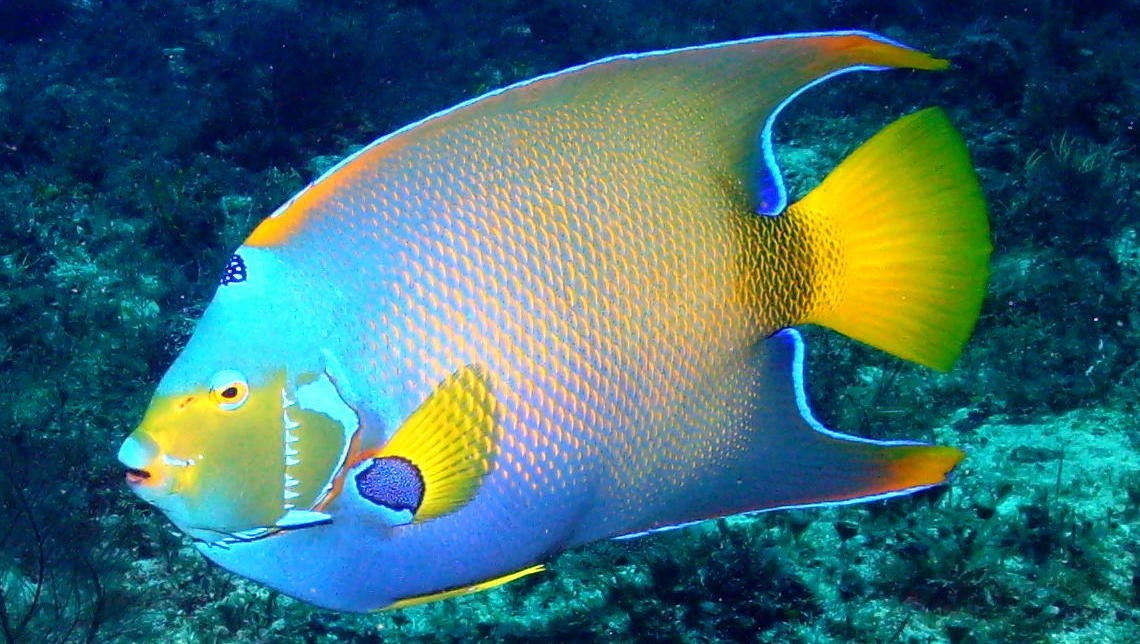
Author Paul Mila, wrote Harry Hawksbill Helps His Friends to impart both a social message for young children and also to teach them about sea life. Paul shared, "As a diver, author, and underwater photographer, showing children the beauty under the sea and the creatures who inhabit the ocean was the easy part. The photos speak for themselves. Teach
Scientific divers often work in remote areas, and sometimes far offshore. In the photo below from author John Heine, research divers from Moss Landing Marine Laboratories instal light calibration sensors on a large optical buoy located 10 miles off the island of Lanai. Special training is required to work in this blue water environment. A detailed
