


We would like to share a compelling testimonial that we just received from Dr. Calderone, CEO of Olympia Medical Center in Los Angeles, CA, regarding his hospital's use of the just released Hyperbaric Patient Safety Instructions. Since implementing the use of the brochures at their hyperbaric clinic, the Olympia Medical Center has had a consis
Divers have used air as a breathing gas since the beginning of diving. Its principal advantages are that it is readily available and inexpensive to compress into cylinders or use directly from compressors with surface-supplied diving equipment. Air is not the “ideal” breathing mixture for diving because of the decompression liability it imposes. Si
Performing repetitive dives requires a the use of a dive plan. The diver must know what the no-stop dive time limits will be for the dives prior to descending so as not to incur additional decompression obligations. A planned dive schedule will work assuming the diver adheres to the maximum depth and time parameters defined before descending; howev
Thermal Stress Irrespective of Ambient TemperatureHypothermia is not a problem exclusive to frigid environments—it can occur irrespective of ambient temperature. Similarly, divers may also suffer extremes of hot and cold thermal stress simultaneously during the same dive. There have been documented cases of severe heat exhaustion in arctic waters b
In this podcast and article by Roque Wicker, MBA, author of HBOTechBlog.com, and creator of the Hyperbaric Oxygen Therapy Patient Safety Instructions we explore the relationship between effective patient education on hyperbaric compliance, patient satisfaction, and reimbursement. Have you ever wondered why your patients quit hyperbaric therap
When you prepare for a dive trip, there are things you pack that are on the "must have" list, such as mask, fins, BCD, and regulator. Then there are the things that you "should have" such as wetsuit, defog, and sunscreen. All of the other items typically fall onto the "it would be nice to have" list, such as snacks, sunglasses, and a camera. The qu

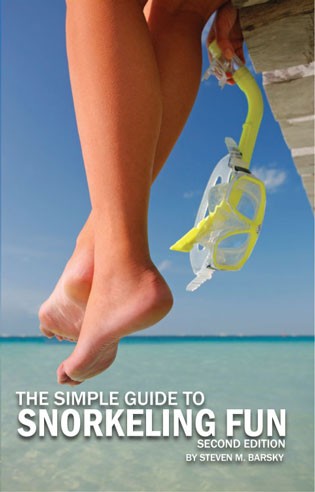
Attention Dive Shop Owners and Operators: are you looking to recruit new divers? Check out the great article that ran on DiveNewsWire about a new diver recruitment opportunity using BPC's book, The Simple Guide to Snorkeling Fun, 2nd Edition. Find the DNW article here http://www.divenewswire.com/NewsITems.aspx?newsID=13173. DNW referenced BPC'

When rebreather use started becoming common at the beginning of the twenty-first century, it was the deep, cave, and wreck divers who adopted the new technology. This equipment allowed them to go deeper, penetrate farther, and conserve expensive helium breathing gas. Because they could push the envelope of diving beyond where they could with tradit
